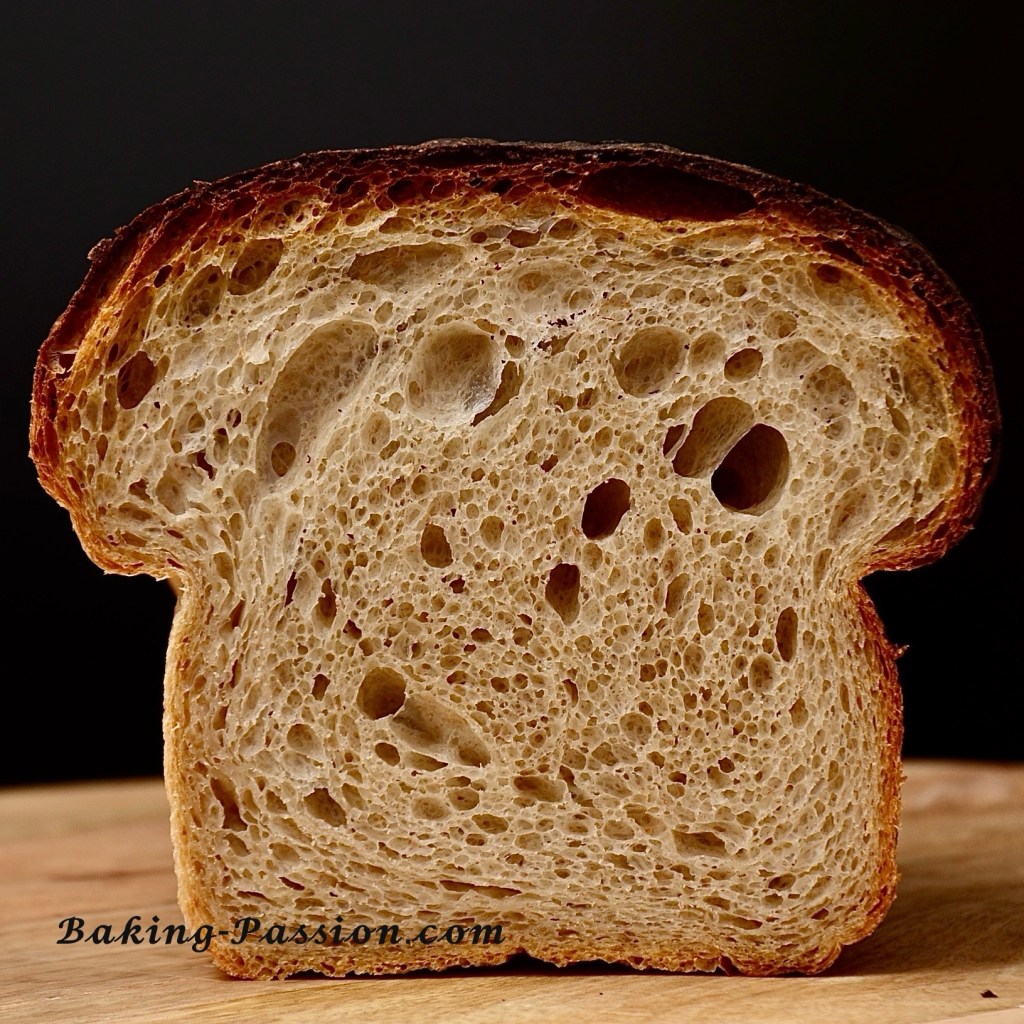
Classic Wheat & Rye Sourdough Loaf – Perfect for Beginners
If you’re new to sourdough, this recipe is a great place to start. The dough is baked in a loaf tin, which makes shaping much easier and removes the stress of ending up with a “flat pancake loaf.” But if you’re feeling confident, you can also shape it into a round free-standing loaf.
The Recipe
• 100g active white sourdough starter (yes, it must be active—this isn’t a “resting starter” situation).
• 450g white bread flour
• 50g wholemeal rye flour (because life’s too short for boring bread).
• 325g water
• 10g salt
The Method
1. Fermentolyse (45 minutes)
Mix the flour and water together (leave out the salt for now). Cover and rest for 45 minutes.
2. Mixing (about 20 minutes)
Add the salt. Mix for about 3 minutes, then rest for 5. Repeat this a few times. The dough will gradually become smoother and more elastic.
3. Bulk Fermentation (about 5 hours)
Leave the dough to rise at 24–28°C. Every 45–60 minutes, gently stretch and fold it. This builds strength and structure.
4. Shaping
Turn the dough out onto a lightly floured surface. Shape it into a log and place it in a greased loaf tin.
4a. Overnight option: After shaping, put the dough straight into the fridge. Leave it for 8–16 hours, depending on your flour. In the morning, it will be ready to bake.
4b. Same-day option: Let it rise at room temperature for about 2 hours, or until it looks airy and ready.
Baking
• Preheat your oven to 240°C. Spray the dough and oven interior with water for that glorious crust.
• Bake for 15 minutes at 240°C, then drop the temp to 190°C for another 50 minutes.
• Finally, take the loaf out of the tin and give it an extra 10 minutes at 220°C to crisp up. Want more crunch? Tinker with the temps and times—experiments are half the fun!
The Result
Once baked, spritz the crust with water and listen as it crackles like applause. The crumb? Airy, chewy, and perfect for sandwiches—or eating straight from the loaf, no judgement here.
And there you have it: a sourdough loaf you can proudly call your own. It’s beginner-friendly for one very good reason—being a tin loaf means it doesn’t demand perfection in shaping. That tin has your back, supporting the dough while you practice the art of folding and forming. No stress, no “pancake loaves,” just plenty of room to build confidence and refine your skills.
So, roll up your sleeves, embrace the process, and don’t fear the floury mess. With this recipe, you get the best of both worlds: reliability for beginners and room to experiment as you grow. Now get baking—you’ve got this!
 Baking Passion