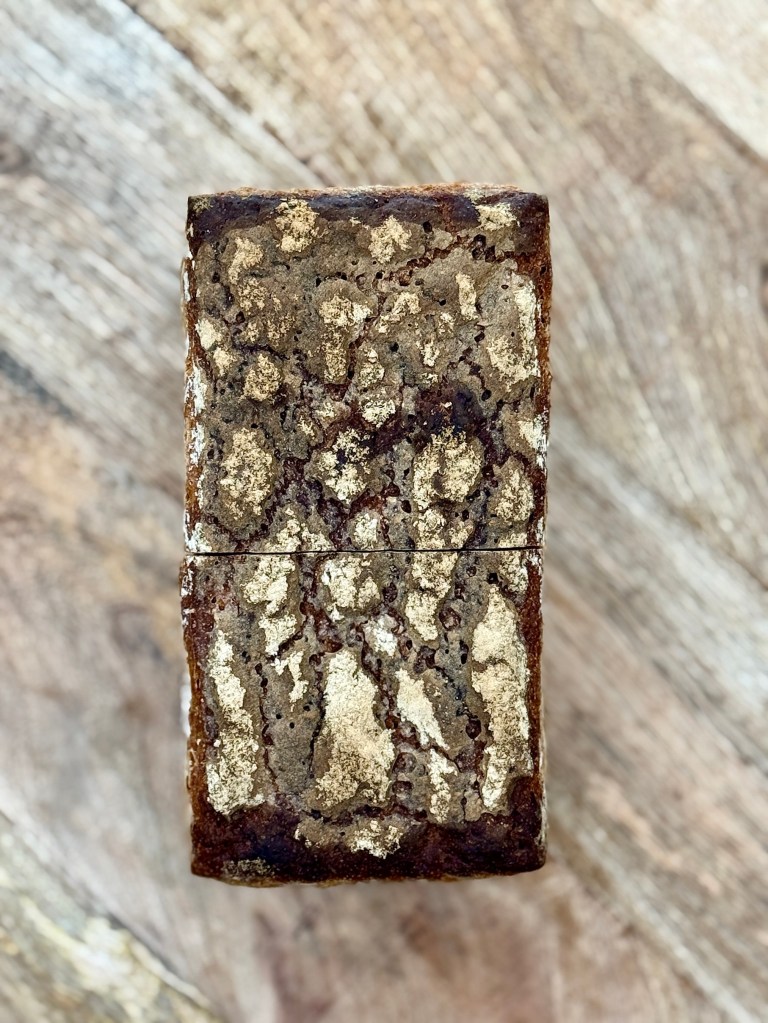
Rye bread is a great choice for anyone looking for a lower glycaemic index option and a healthier form of gluten. It has a deep, earthy flavour and a unique texture – very different from soft white loaves. This recipe uses three fermentation stages and does not require kneading.
Stage 1: The Starter (prepare the night before)
Ingredients:
- 25g active rye starter (must be bubbly and alive)
- 130g rye flour
- 140ml warm water (about 30°C – like a warm bath)
Method:
- Mix the starter, flour, and water with a spoon or spatula until combined.
- Cover the bowl and leave at room temperature for 10–12 hours.
- By morning, the mixture should double or triple in size, with bubbles on the surface.
Stage 2: Feeding Time
Ingredients:
- All of the dough from Stage 1
- 35g white rye flour
- 35g wholemeal rye flour
- 75ml warm water (30°C)
Method:
- Mix everything until combined.
- Cover and leave to ferment for about 3 hours at 28–30°C.
- Look for bubbles on the surface – small dark spots or holes that show it is alive and active. If the dough rises and then flattens, it is ready for the next step.
Stage 3: The Final Dough
Ingredients:
- All of the dough from Stage 2
- 310g white rye flour
- 250ml warm water (30°C)
- 10g salt
Method:
- Mix everything into a sticky dough.
- Transfer into a greased loaf tin, filling it about halfway to leave room for rising.
- Leave to rise for 2.5–3 hours at 28–30°C, until bubbles appear again on the surface (like dark little holes).
Baking
- Preheat the oven to 245°C.
- Bake the loaf in its tin at this temperature for 15 minutes.
- Reduce the oven to 190°C and bake for another 50 minutes.
- Remove the loaf from the tin and bake directly on the oven rack at 220°C for 10 minutes to crisp the crust.
Cooling and Storage
- Allow the loaf to cool completely before slicing – ideally overnight.
- Rye bread should not be eaten warm, unlike wheat bread. If sliced too early, it will stick to the knife and feel gummy.
- After 24 hours or more, the flavour develops fully and the bread shows its true character.
- Rye bread keeps well. Even after a week or two, thin slices with butter are still delicious.
Result
A wholesome rye bread with a rich, earthy flavour and a firm crust. Like a fine wine, it improves with time. Give it patience, and it will reward you with depth and character.
 Baking Passion